AI product management · Industry brief
Top three stories shaping AI product management today, written for someone who already works in the industry: regulation, M&A, new entrants, notable filings, and any precedent worth pulling. Cite the trade publication (e.g. trade press, government source, court docket) directly so I can follow up.
Governance becomes operational; EU Act deadlines tighten; legal tech exits accelerate
Continuous governance replaces annual reviews
Static compliance checkboxes are dead.
Enterprise AI governance is shifting from point-in-time annual audits to continuous monitoring loops that track AI activity in real time and feed evidence back into the next policy cycle [Source: Witness AI]. The EU AI Act now mandates lifetime monitoring and incident reporting within two days for high-risk systems, while 69% of organizations have undetected shadow AI running for months. NIST and ISO/IEC 42001 frameworks explicitly codify runtime enforcement (Allow, Warn, Block, Route) as core operational capability, not a post-deployment layer.
Organizations operationalizing continuous oversight with audit trails are seeing faster adoption and lower breach risk.
EU AI Act: roles, inventory, enforcement clocks
December 2027 is no longer theoretical.
The EU AI Act applies across the entire supply chain—providers, deployers, importers, distributors, and non-EU companies selling into Europe all carry specific obligations [Source: French Compliance Institute]. Enterprises must map their role for each AI system (a company may be both provider and deployer simultaneously), build AI inventories before December 2027, and prepare for penalties reaching €35 million or 7% of global revenue. Prohibited practices and AI literacy requirements are already live; general-purpose model obligations took effect August 2025.
Enterprises without AI inventories and risk classifications by Q4 2026 face enforcement exposure.
Compliance tooling shifts to always-on evidence
Regulators now expect real-time proof, not audits.
Purpose-built AI governance platforms like Hydrus AI, Keyrus, Optro, and Utility Analytics are automating risk classification, control mapping, and audit-ready compliance evidence across financial services, healthcare, and government [Source: IEEE]. The operating model is evolving toward workflow-embedded enforcement rather than parallel documentation silos; as agentic AI proliferates, enterprises need monitoring baked into where teams build and deploy, not bolted on afterward. Organizations treating governance as a checkbox exercise face regulatory exposure and stalled deployments.
Continuous compliance evidence is becoming a procurement requirement.
 AI governance as continuous improvement: The enterprise loop23 hours ago ... WitnessAI gives security and compliance teams a shared framework. Legal and AI teams can use the same framework to build confidence in AI adoption.witness.ai
 Best AI Governance Companies 2026: Complete Guide to Safety ...18 hours ago ... Enterprises with mature data science functions but immature governance frameworks often benefit most from this advisory-forward posture. 3. Optro — Best for ...r9.ieee.org
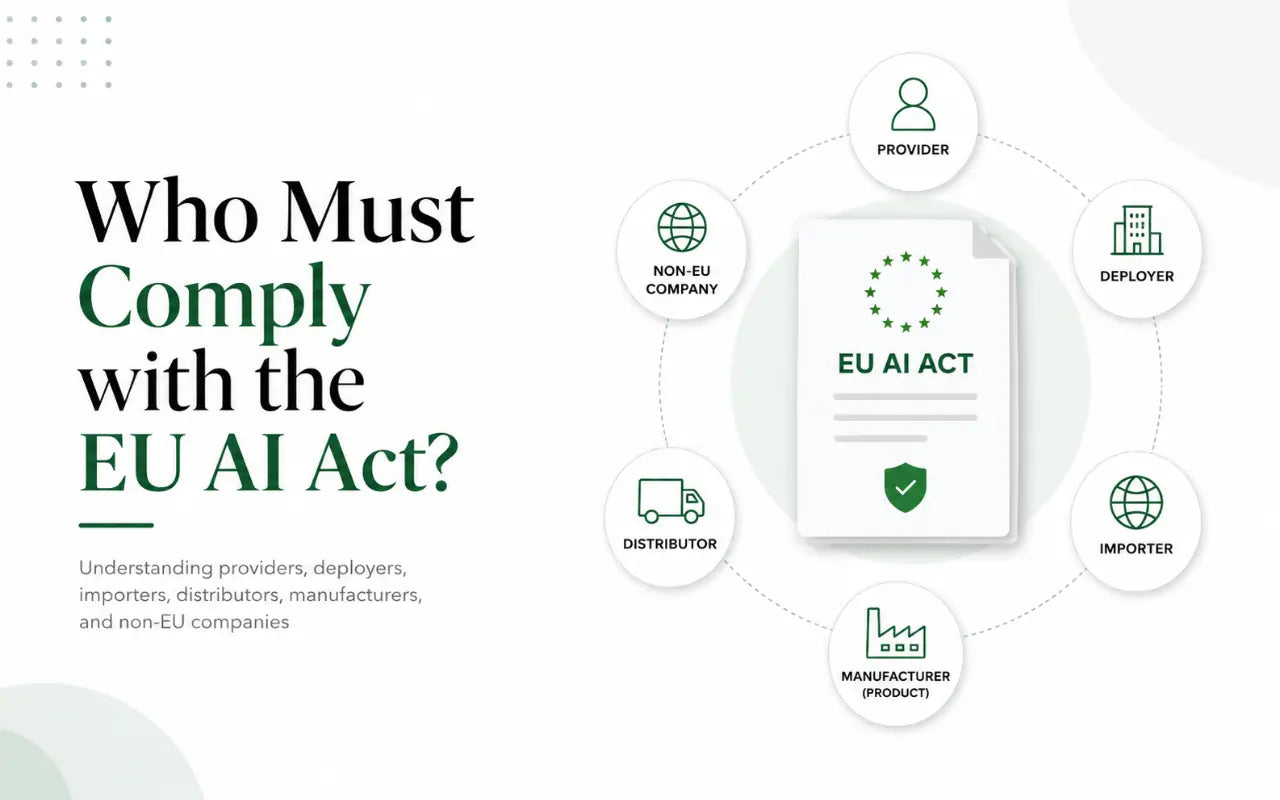 Who Must Comply with the EU AI Act? - French Compliance Institute18 hours ago ... This is particularly relevant where AI systems are incorporated into products covered by existing EU product safety legislation. ... product management, legal ...frenchcomplianceinstitute.com
More from Tech
- Agentic CodingTop tech stories today across software, hardware, AI, and product launches. Senior engineer audience — skip rumour churn and pre-announcement leaks. Lead with shipping-now stories and what changed for builders.Read
- Cybersecurity · Industry briefTop three stories shaping Cybersecurity today, written for someone who already works in the industry: regulation, M&A, new entrants, notable filings, and any precedent worth pulling. Cite the trade publication (e.g. trade press, government source, court docket) directly so I can follow up.Read
- AI developer tools · What shippedFor a senior engineer who already reads HN. Real changes in AI developer tools today: releases with version numbers, papers with benchmarks, repos that crossed a threshold worth knowing. Skip hype threads, pre-announcement leaks, and recycled summaries. Always link primary sources.Read