Fintech · Industry brief
Top three stories shaping Fintech today, written for someone who already works in the industry: regulation, M&A, new entrants, notable filings, and any precedent worth pulling. Cite the trade publication (e.g. trade press, government source, court docket) directly so I can follow up.
California expands fintech licensing, debanking enforcement widens, stablecoin AML floor hardens
2 min read
California licensing expansion
California just drew a line around merchant cash advances and factoring.
Governor Newsom signed Assembly Bill 2116 in September, expanding the California Financing Law to cover commercial financing providers and brokers offering products of $500,000 or less [Quelle: Morrison Foerster]. New licensing kicks in July 2028, with contract enforceability provisions live January 1, 2028. The Department of Financial Protection and Innovation gains supervisory authority to suspend or revoke licenses for repeated failures to assess repayment ability, and covered providers must file annual transaction reports detailing volume, amounts financed, and APR disclosures by size cohort.
Implementation questions loom around exempt transactions and regulatory scope—clarity lands before 2028 effective dates.
Debanking and AML enforcement converge
Regulators are connecting AML failures to access denial in real time.
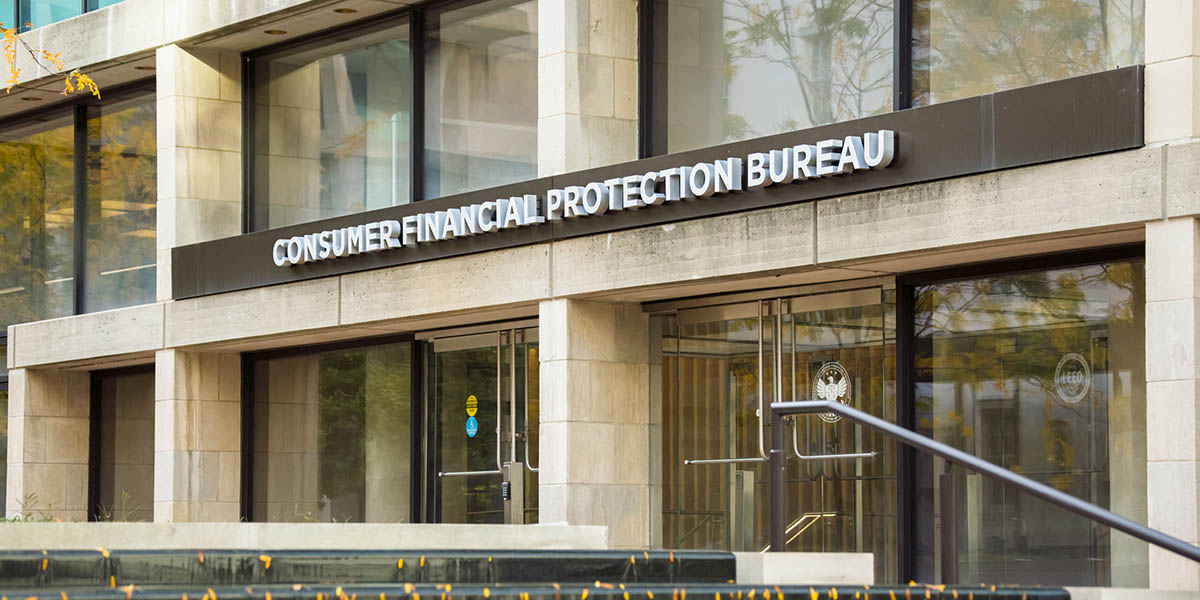
Following yesterday's $1.2B BofA enforcement action, the OCC released its final debanking report on October 14, revealing that nine large national banks deployed vague "reputation risk" policies to cut off access for coal, firearms, and other disfavored industries [Quelle: Consumer Financial Services Law Monitor]. The CFPB announced the same day it will investigate whether those nine banks and others violated fair lending and UDAAP provisions. The OCC has eliminated reputation risk from its supervisory framework and incorporated debanking into licensing and CRA exams, with rulemaking planned to prevent discrimination on political or religious grounds.
Access denial just became a direct enforcement vector, not a sideline compliance footnote.
Stablecoin AML floor hardens under GENIUS
The OCC's Wise charter denial set the compliance bar—every stablecoin fintech must clear it.
Federal regulators are implementing the GENIUS Act through coordinated AML and customer ID rules, with FinCEN and OFAC jointly proposing stablecoin issuer compliance requirements in April and five agencies establishing CIP standards in June [Quelle: Koley Jessen]. Stablecoin issuers must now maintain BSA-compliant programs identifying and mitigating ML/TF risks; the OCC separately announced a supervisory framework for issuers. The 30-day comment window on AML/CFT rules drew 109 responses, with banks flagging timing misalignment and structural asymmetry between primary issuers and secondary-market actors.
Expect the final rules to narrow secondary-market pathways and push stablecoin infrastructure onto the same AML perimeter as banks.

California Expands the California Financing Law to Include Small ...6 hours ago ... The Amendments authorize license suspension or revocation where a commercial ... Providers, brokers, fintech platforms, and purchasers of commercial ...mofo.com

California Governor Gavin Newsom signed Assembly Bill 2116 in September 2026, significantly expanding the California Financing Law to regulate commercial financing providers and brokers offering products of $500,000 or less, including merchant cash advances and factoring. The law establishes new licensing requirements effective July 1, 2028, with contract enforceability provisions beginning January 1, 2028. The Department of Financial Protection and Innovation will supervise covered providers and brokers, with authority to suspend or revoke licenses for repeated failures to consider repayment ability. Licensed providers must file annual reports with the DFPI detailing transaction volumes, amounts financed, and APR disclosures by transaction size. The legislation creates some implementation uncertainties regarding the interaction between existing exemptions and the separate licensing requirement, particularly for occasional financing transactions, which may require regulatory or legislative clarification before the effective dates.
2026 Anti-Money Laundering Regulations: Bank of America ...5 hours ago ... For banks, commercial lenders, fintech companies and other financial ... The enforcement actions reinforce a fundamental regulatory expectation: AML ...kjk.com
Bank of America faced a $1.2 billion AML enforcement action on October 13, 2026, comprising a $1.2 billion civil money penalty from FinCEN, a $750 million penalty from the OCC, and an $11.6 million sanctions settlement from OFAC for willfully violating the Bank Secrecy Act through inadequate AML compliance, deficient foreign correspondent account due diligence, and failure to timely file suspicious activity reports. The enforcement action represents the third-largest Treasury penalty in history and the largest civil money penalty ever assessed by the OCC, with deficiencies involving Chinese money laundering networks and southwestern border financial activities. The OCC also identified widespread weaknesses in transaction monitoring, personnel training, internal controls and independent auditing, noting the bank's failure to address deficiencies previously identified in a December 2024 consent order (source: U.S. Department of the Treasury, FinCEN, OCC, OFAC announcements, October 2026). Federal regulators are implementing the GENIUS Act with proposed AML and sanctions compliance requirements for permitted payment stablecoin issuers. FinCEN and OFAC jointly proposed regulations on April 8, 2026, requiring stablecoin issuers to maintain effective BSA-compliant programs identifying and mitigating money laundering and terrorist financing risks. On June 18, five federal banking agencies jointly proposed customer identification program requirements, followed by an OCC proposal on June 22 establishing a supervisory framework for stablecoin issuers (source: FinCEN, OCC, Federal Reserve, FDIC, National Credit Union Administration proposed rules, April-June 2026).
The OCC's Final Debanking Report and the CFPB's Response3 hours ago ... Consumer Financial Services Law Monitor. Monitoring the financial services industry to help companies navigate through regulatory compliance, enforcement, and ...consumerfinancialserviceslawmonitor.com

The OCC released its final report on October 14 reviewing debanking practices at nine large national banks, finding they used broad, subjective "reputation risk" policies influenced by political considerations and public opinion to restrict access to financial services for disfavored industries including coal and firearms. The OCC identified inconsistent application of these policies, reliance on negative news and third-party ESG reports, and inadequate customer communications, noting that banks later adopted industry-specific restrictions under pressure from state fair access laws. The OCC has eliminated reputation risk from its supervisory framework and incorporated debanking considerations into licensing filings and Community Reinvestment Act examinations, with plans for further rulemaking to prevent discrimination based on political or religious beliefs and to address pretextual Bank Secrecy Act enforcement. The CFPB announced the same day that it will investigate whether the nine banks in the OCC report and others complied with federal consumer financial protection laws, evaluating compliance with the Equal Credit Opportunity Act, Fair Credit Reporting Act, and the prohibition on unfair, deceptive, or abusive acts or practices, extending scrutiny beyond the nine OCC-examined banks to a broader set of institutions.